
Thinking
From Philosophical Reflection to Science: Where Method Begins
3 min read
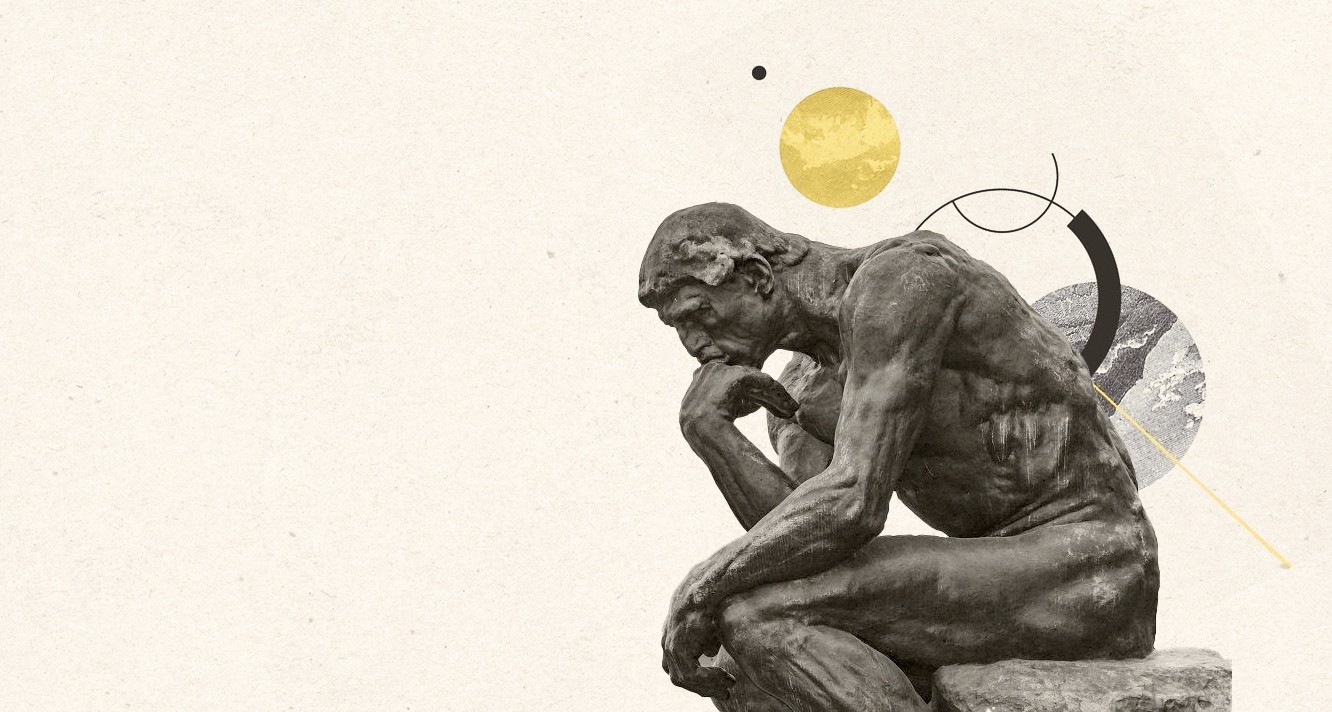
Philosophical reasoning is a particular way of clarifying and substantiating ideas, and it almost always requires a high level of effort — both intellectual and emotional. The more complex the subject, the more complex the trajectory of thought itself becomes.
It usually begins with a spark of interest — a question that captures attention, unsettles, and refuses to let go. Thought then begins to unfold: first through associations and images that a person attempts to express in words. At this stage, thinking often operates through metaphors, symbols, and analogies — as if consciousness is searching for the first form capable of holding meaning.
Only later does a more structured and ordered construction gradually emerge from this raw material: a conceptual framework within which thought takes shape as a sequence that appears logically coherent to the philosopher.
But this process never unfolds in a vacuum. External circumstances constantly exert pressure on reasoning — everyday life, responsibilities, time constraints, and environmental limitations. At the same time, internal states also play a role: fatigue, tension, and psychophysiological characteristics.
As a result, a persistent tension almost always remains within the thinking mind: thought is in motion, yet it is continuously constrained and disrupted. It is precisely the attempt to relieve this tension — while simultaneously reflecting on it — that gives rise to what can be called genuine reflection: the ability to move beyond immediate impressions, to seek more general definitions, to compare the particular with the universal, and to establish a meaningful framework.
This is how a zone of reflexivity is formed — a space in which a person is able not only to construct knowledge from experience but also to observe their own thinking. This refers to self-reflection: when a person turns their intellectual activity into an object of attention and begins to see not only what they think, but how they think.
Where there is activity and movement, change inevitably arises. Moreover, in reflection, change primarily affects the subject itself — their consciousness. Each new act of thinking, each piece of knowledge obtained through reflection, slightly restructures the person who acquires it. This happens continuously: people create knowledge, and knowledge, in turn, transforms people.
From this follows an important, though not always obvious, conclusion.
Each time a person engages in philosophical reflection, they reconstruct the same internal cognitive schema — the way in which their consciousness manages tension and transforms an experience or a problem into an intelligible structure. This schema is unique to each individual. At the same time, it has a structure and criteria: it can be described, compared, and made visible to others.
This is where the bridge to science emerges: reflexivity creates the conditions for a critical stance — and therefore for a scientific mode of thinking.
In other words, scientific knowledge becomes possible when a person is not only able to understand something, but also to demonstrate how they arrived at that understanding. As long as there is only an insight, understanding remains a personal event. Science begins where a method appears: a sequence of steps, a logic, and a set of principles that can be reproduced, refined, and transmitted to others.
At the same time, two important points should be kept in mind.
First, the methodology of scientific knowledge cannot be a rigid set of laws that applies in every situation. Rather, it is a system of guiding principles and general orientations — useful reference points that support thinking and inquiry, but do not have the status of absolute necessity.
Second, any reflexive — and therefore scientific — methodology is not fixed once and for all. It evolves and develops alongside changes in humanity itself: its language, culture, tools, and level of intellectual development.